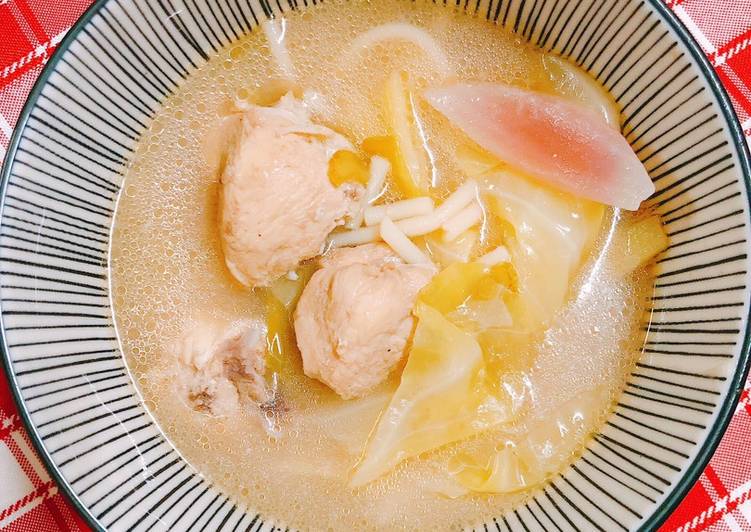
Hello everybody, hope you are having an amazing day today. Today, I will show you a way to make a special dish, sinampalukang manok with leftover pasta noodles. One of my favorites food recipes. For mine, I will make it a little bit unique. This will be really delicious.
Sinampalukang Manok with Leftover Pasta Noodles is one of the most favored of current trending meals on earth. It’s appreciated by millions daily. It is easy, it’s fast, it tastes yummy. They’re nice and they look wonderful. Sinampalukang Manok with Leftover Pasta Noodles is something that I’ve loved my entire life.
Ginataang Manok with Papaya (Chicken with Green Papaya Cooked in Coconut Milk). Sinampalukang Manok is a delicious sour chicken soup recipe boiled with vegetables and souring agents. Some people say that Sinampalukang Manok is just another sinigang recipe.
To begin with this particular recipe, we have to prepare a few components. You can cook sinampalukang manok with leftover pasta noodles using 14 ingredients and 4 steps. Here is how you cook it.
The ingredients needed to make Sinampalukang Manok with Leftover Pasta Noodles:
- Get 1 whole chicken (chopped to the number of pieces you prefer)
- Prepare 5 pieces chopped garlic
- Make ready 1 medium red onion
- Get 1 thumb of ginger
- Take 1/4 of a green cabbage head (separate the hard parts and the soft parts)
- Make ready 3 stalks chopped celery (save the leaves)
- Get 3 long green chilis
- Prepare 1 pack Sinigang sa Gabi Tamarind soup base
- Get 100 grams cooked noodles (I used spaghetti for this recipe)
- Prepare While peppercorns to season
- Make ready to taste Fish sauce
- Get Neutral oil to fry in
- Take Water for the soup (eyeball this because every pan is different)
- Get Lemon Salt (optional)
Normally the chicken sauteed and cooked in a combination of onions, garlic, ginger, different vegetables and tamarind which gives a. Sinampalukang Manok is a Filipino sour soup made with chicken and flavored with young tamarind leaves. Piping hot and comforting, it's the Sinampalukang manok, in need of definition, is chicken cooked ala-sinigang but uses young tamarind leaves along with the tamarind pulp to sour the broth. Sinampalukang Manok is a traditional Filipino dish that features chicken and tamarind leaves.
Instructions to make Sinampalukang Manok with Leftover Pasta Noodles:
- On medium heat, add oil to your pan. Once oil is hot and ready, add garlic, onion, and ginger and sauté for a few seconds. Add the chicken in and sauté for at least 10 minutes to release it's juices.
- Once the chicken is sautéed, turn the heat on to low and add the water in until all the chicken is submerged in the water. Make your Sinigang sa Gabi Tamarind Soup Base, long green chilis, celery (for the leaves, add it in but make sure that you tie them all together or use a cheesecloth to bundle them together as you’re going to take them out when the dish is fully cooked) and hard cabbage parts in and give it a quick stir.
- Leave the pot on low until the soup comes to a full boil. Once the soup is on full boil, add peppercorns and fish sauce to taste — adjust it to your liking. If you have lemon salt, use it as well to REALLY add that sour kick to your dish. Remember to add the seasoning gradually, tasting as you go. Add the rest of the cabbage here.
- For the final step, add your leftover pasta noodles in, and give it a quick stir. Take out the celery leaves, and serve! Enjoy 😉
The tamarind gives the soup its classic sour flavor, but other vegetables like green beans and tomatoes help round out the dish. Best of all, sinampalukang manok isn't that difficult to make, so you can try your. In a pot over medium heat, heat oil. Add onions, garlic, and ginger and saute. Add green chilies and tamarind leaves.
So that’s going to wrap it up for this exceptional food sinampalukang manok with leftover pasta noodles recipe. Thank you very much for reading. I’m sure that you will make this at home. There is gonna be more interesting food at home recipes coming up. Don’t forget to bookmark this page on your browser, and share it to your loved ones, colleague and friends. Thanks again for reading. Go on get cooking!